Integrated overview · for boards, investors and policy makers
Two axes of a student’s learning. One principle.
Science and writing are where an elementary-school student’s thinking becomes visible. UFIT applies one measurement principle to both — Aprendiz Inteligente for how a student reasons through science, VeriWright for how a student builds a sentence. Neither scores only the finished product. Both read the process that produced it, and turn it into something a teacher can act on this week — and, where it matters, early enough to change the outcome.
The framework
One principle, two axes, one student profile.
A school already knows what a student produced. What it rarely knows is how — where the thinking went fast, where it stalled, where it went back and repaired itself. Both products capture that, on their own axis, and write into the same profile.
How a student reasons through a problem
Aprendiz Inteligente · in service in Brazilian public schools
- LearnAn AI learning board builds the lesson from approved textbooks only — concept, glossary, comparison tables, checks for understanding.
- DoExperiment and investigation: a hypothesis written before the result is known, a variable the student manipulates, a conclusion the student must argue. Plus AI-rendered visuals and manipulable simulations for what a classroom cannot show.
- AssessItems in the state assessment format, each tagged with its curriculum skill and its Bloom level — so a wrong answer names the idea to reteach, not just a lost point.
How a student builds a sentence
VeriWright · controlled pilots, primary and secondary
- CaptureA digital pen on ordinary paper records timing, pauses, pressure and pen movement. No tablet, no special surface, nothing about the lesson changes.
- ReplayThe session is reconstructed — not the finished text, but the order and rhythm in which it appeared.
- ReadThe trace is mapped onto the cognitive process behind it: planning, translating, monitoring, revising — and what each cost the writer.
One individual learning profile
Per student, over time, and read against that student’s own history rather than against a class average. Two subjects, one picture of how this learner works.
Action a teacher can take this week
Not a score to file. A named strength to build on, a named gap to close, and the specific next activity for each — for every student in the class, from one report.
An earlier intervention window
Process signals diverge before the product does. A student compensating hard to produce acceptable work is invisible to outcome-only marking — and visible here.
Inclusion without separate tracks
One common activity for the whole class, adapted by need rather than by diagnosis label. No student is sent to a parallel worksheet to be included.
Research foundation & collaboration
Built on established science, not on assertion.
Both axes rest on published research lines with named institutions behind them — the interactive-simulation pedagogy of a Nobel laureate’s project at the University of Colorado Boulder, and the German digital-pen research line at KIT, Fraunhofer IIS and DFKI.
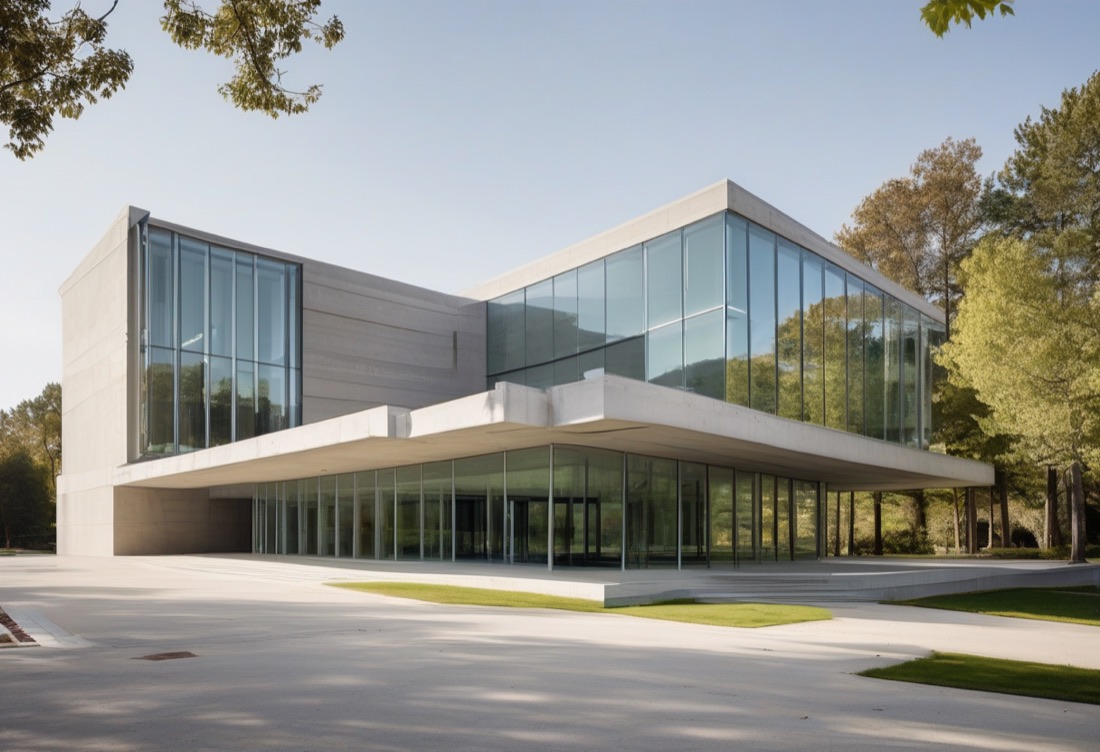

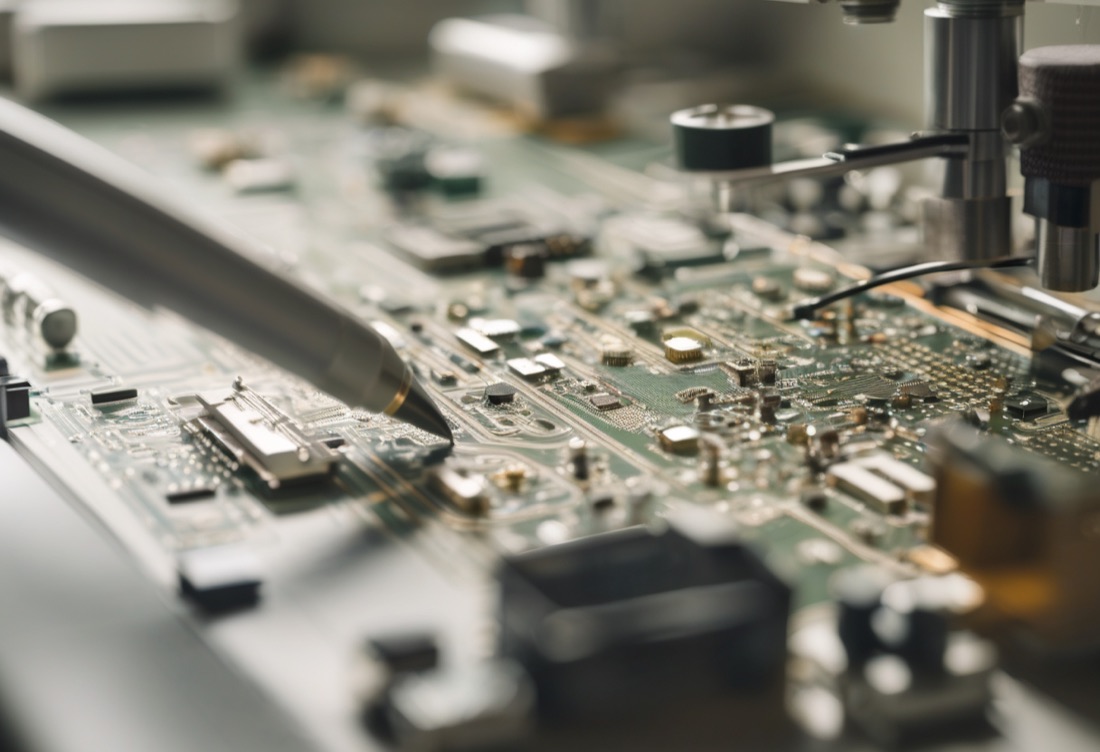
Images are rendered illustrations of the settings described — not photographs of the institutions named below, and not of any real classroom or student.
Interaction as the learning mechanism
PhET Interactive Simulations · University of Colorado Boulder
Founded in 2002 by Carl Wieman, recipient of the Nobel Prize in Physics in 2001. HTML5 simulations across physics, chemistry, biology, earth science and mathematics — the premise being that a student learns a system by changing it and watching it respond, not by reading about it.
Writing captured on ordinary paper
Karlsruhe Institute of Technology · ITIV — project KIHT
Kaligo-based Intelligent Handwriting Teacher, a Franco-German joint project building an intelligent handwriting-learning device around a sensor pen. Inertial sensors reconstruct the writing trajectory with no tablet and no special surface; ITIV’s part is running those AI algorithms on the pen’s integrated hardware.
The sensor signal, benchmarked
Fraunhofer Institute for Integrated Circuits (IIS) · OnHW dataset
Online Handwriting Recognition from Sensor-Enhanced Pens — raw time-series from a multi-sensor digital pen released as a public benchmark: triaxial acceleration, gyroscope, magnetometer and force at 100 Hz. The OnHW-chars set alone holds 31,275 letters from 119 writers.
Cognitive state from pen signals
German Research Center for Artificial Intelligence · Interactive Machine Learning Lab
Two lines meet here: whether low-level pen signals can predict task difficulty and performance in elementary-school students, and a style-versus-content neural architecture that confirms, passively and continuously, that the person writing is the person enrolled.
From a pen stroke to an intervention
The chain a policy maker should be able to follow end to end. Nothing else is recorded, and nothing is inferred that does not start here.
- Triaxial acceleration
- Gyroscope · rotation
- Magnetometer · orientation
- Force · tip pressure
- Timing · ~100 Hz
Cognitive-process parameters computed from those streams — pause length and placement, in-air time, burst structure, velocity variability, pressure stability, retrace and revision events.
Models trained on those parameters estimate the writing process stage and its cost, and compare a session with the same student’s earlier sessions rather than with a class average.
- Process profile per student
- Class-level report for the teacher
- Early flag → professional assessment
- Structured plan for home
The 150+ figure is UFIT’s own feature count for the VeriWright pipeline. The institutions named above are cited as the published research basis of the approach; they are not an endorsement of UFIT, and a shared benchmark or sensor model does not transfer any published accuracy figure to our products.
Running today in Brazilian public schools.
Science is the axis already in service — years 5, 7 and 8 — and it is also the proof that the engine is not subject-specific. The same six-tab lesson structure, the same generation-and-review pipeline and the same accessibility contract have already been carried into other subjects.
in service in development roadmap
| Subject | 5th year | 7th year | 8th year | Basis |
|---|---|---|---|---|
| Science | ● in service | ● in service | ● in service | Approved textbooks, retrieval-augmented generation (RAG) |
| Arts | ◐ in development | Public-domain masterworks, gigapixel study | ||
| Geography / History | ◐ in development | National satellite & census open data, heritage field trips | ||
| Further subjects | ○ roadmap — same engine, new content | Curriculum sources per subject | ||
How the AI board and the quiz items are actually made
The engineering behind “AI-generated”. Nothing is written from the open internet, and nothing reaches a student without a human signature.
Why expansion is cheap
The board is a structure, not a subject: objective, concept, experiment, investigation, exploration, glossary. Adding a subject means adding approved sources and activity types — not rebuilding the platform.
Simulations, by type not by title
61 science activities were classified into 5 reusable activity types; the three built so far already cover 46 of them. Types transfer across subjects and years.
Every student, one activity
From general classes to students with intellectual disabilities, sensory disabilities and neurodivergence — the same lesson, adapted by need. Support is switched on by need, not by a diagnosis label, and every AI-generated adaptation is reviewed by a teacher and a subject specialist before a student sees it.
Composition assessed as a process, not only as a product.
Automated essay scoring reads what survived onto the page. It cannot see the twenty minutes that produced it. VeriWright assesses the writing process — and that difference is what makes early identification possible.
writing short pause long pause · searching pen in the air revision
Product-only assessment
What a finished text can tell you
- ✓Spelling, grammar, structure, length
- ✓Whether the task was completed
- ✕Nothing about effort — a student who struggled for forty minutes and a student who finished in five look identical
- ✕Nothing about a student compensating — producing acceptable work at an unsustainable cost
- ✕Nothing until the output is already failing — which is usually years late
Process assessment
What the production of the text adds
- ✓Where planning happened — before writing, or not at all
- ✓Where language came easily and where it was searched for
- ✓Whether the student rereads and repairs their own text — the mark of a self-monitoring writer
- ✓What the work cost, measured against the same student’s earlier sessions
- ✓Divergence visible while the product still looks acceptable
One class, one report, three conversations
The teacher receives the whole class in a single view, sorted into three bands — each with a different action attached. The point of the report is not the ranking; it is that every band gets something.
Process diverges
Flagged early, referred properly
Where the process looks unlike the student’s peers and unlike their own baseline. The flag opens a professional pathway — it never closes one.
- Early screening flag with the evidence attached
- Referral to a qualified professional or specialist service
- A structured intervention plan shared with the family and the student
- Re-measurement against the same baseline to show whether it worked
Typical range
Strengths named, one gap closed
The majority, and usually the group that receives the least specific feedback. Process data gives each of them something concrete.
- One strength to keep, stated plainly
- One gap to close, with the activity that closes it
- Progress measured against their own earlier sessions
Strong writers
Extended, not parked
The most commonly wasted group. Finishing early is treated as a reason for enrichment that builds on the specific strength the process shows.
- The strength is named — planner, fluent drafter, disciplined reviser
- An extension plan that stretches that strength
- Peer roles where the strength is useful to others
For a system, not just a classroom
What changes at policy scale.
The intervention window moves earlier
Support that arrives when written output has already failed is remediation. Support that arrives when the process first diverges is prevention — and the difference is measured in school years, not weeks.
Teacher time returns to teaching
Lesson material, curriculum-aligned assessment and the class report are generated and pre-checked. The teacher’s judgement is spent on the decision, not on the preparation.
Inclusion becomes the default path
One common activity for the whole class, adapted by need — the legal and pedagogical opposite of a separate track. Accessibility is built into the content model itself, not added as an overlay widget.
Status & governance
What is running, what is being built, and the lines we do not cross.
Stated plainly, because a reviewer should not have to work it out. Nothing on this page is described as shipped unless it is.
| Capability | Product | Status | Detail |
|---|---|---|---|
| AI learning board — retrieval-augmented lessons | Aprendiz | ● in service | Brazilian public schools · years 5, 7, 8 science |
| AI quiz generation — state-assessment item format, Bloom-tagged | Aprendiz | ● in service | Paper (OMR) or on screen; every item curriculum-checked and teacher-reviewed |
| Experiment & investigation tabs | Aprendiz | ● in service | Hypothesis · manipulated variable · argued conclusion; model limits disclosed |
| AI-rendered science images and video | Aprendiz | ◆ in service, expanding | Generated from approved material, checked against the lesson text, teacher sign-off |
| Interactive simulations (PhET foundation) | Aprendiz | ◐ in development | 5 activity types classified; 3 live covering 46 of 61 activities; content awaiting specialist validation |
| Accessibility — 4 adjustable axes + non-negotiable baseline | Aprendiz | ◆ rolling out | WCAG 2.2 AA design target · eMAG · LBI 13.146 · LGPD · LIBRAS · BNCC · UDL |
| Subject expansion — arts, geography / history | Aprendiz | ◐ in development | Built on national open data and public-domain collections |
| Pen capture & writing-process replay | VeriWright | ◆ pilot-ready | Digital pen on ordinary paper; demonstrations on this hub use synthetic data |
| Cognitive-process dashboard for teachers | VeriWright | ◐ controlled POC | Planning / translating / monitoring / revising, with cost per session |
| Class report, three-band tiering & referral pack | VeriWright | ◐ controlled POC | Validates operability, teacher workflow and data safety before scale |
| Authorship / integrity signal | VeriWright | ○ research-stage | Authorship continuity, not AI-detection; no automated consequence |
| Inclusion programme — individual learning plan, planning & training | Both axes | ◐ POC in Korea | Plan → practice → re-measurement; in controlled POC with Korean partners, preparing launch |
The lines we do not cross
- ■The teacher decides. No automated grading, discipline, placement or diagnosis, in either product.
- ■Screening is not diagnosis. A flag routes a student to a qualified professional; it never labels them.
- ■One class, one activity. Adaptation by need, never a separate track — the LBI 13.146 principle, applied in the content model.
- ■Compared with themselves. Process indicators are read against the same student’s history, not ranked between students.
- ■Data minimisation. Minimal collection, limited retention, deletion by default; no re-use for unrelated model training, advertising or sale.
- ■Rights are real. Students and families can request explanation, correction, appeal and human review.
- ■Retrieval-augmented generation. Content is generated from approved material only, and reviewed by a teacher and a subject specialist before a student sees it.
- ■Every demonstration is synthetic. No real student’s record appears anywhere on this hub.
Inclusion programme · POC in Korea · preparing launch
A measurement is only worth taking if it becomes a plan.
Reading the process tells a school what is happening. It does not, on its own, tell a teacher what to run on Tuesday morning. The third piece of the framework closes that gap for the students inclusion policy is written for — an individual learning plan, a planned week, and a training programme, generated from the same signals the two axes already produce, and re-measured against the same baseline. It is in controlled POC in Korea and being prepared for launch.
01 · Read
Signals already on file
The science profile and the writing process for that student — plus what the school already knows. No new testing round is imposed to start.
02 · Plan
One individual learning plan
Goals in the student’s own terms, the supports switched on by need, and what “progress” will look like — in one document a teacher, a specialist and a family can all read.
03 · Schedule
A planned week, not a wish list
The plan is broken into what fits an actual timetable: which activity, in which lesson, with which adaptation — inside the class the student is already in.
04 · Train
Targeted practice
Short, repeatable training on the specific thing the process showed — sequencing, planning before writing, sustaining attention, self-checking — for school and, where a family wants it, for home.
05 · Re-measure
Against the same baseline
The same indicators, read again after the cycle. The plan is updated by evidence, not by impression — and a plan that did not work is visible as such.
One programme, not three purchases. Science, writing and inclusion support run on the same profile, the same accessibility contract and the same reporting surface — so a school adopts one thing and a system procures one thing. This is what makes the framework an integrated learning programme rather than two products that happen to share a logo.
Go deeper on either axis.
Each product page carries the live demonstration, the worked examples and the full accessibility and governance detail behind this overview.